A precise way to find muscles that have lost their connection to your nervous system and switch them back on, so tight, weak or painful areas can move and work again.

Stress, trauma and overuse add up. Over time they can create inflammation that makes your muscular system less efficient and dulls neuromuscular function, the signal that runs between your nerves and your muscles. Muscle Activation Techniques (MAT) is designed to correct those inefficiencies and restore that communication.
Why do muscles stop working well in the first place? As the conversation between the nervous system and the muscles breaks down, body mechanics change. That often shows up as muscle tightness, pain and the stiffness many people chalk up to getting older. It can come from one traumatic event or from a long series of small micro-traumas. Either way, the muscle contracts less efficiently, and that inefficiency can gradually weaken it and leave you more vulnerable to pain, injury and chronic degenerative conditions.
MAT works to reestablish those communication pathways so muscles contract better and do their job. Dr. Shyla Mesch is trained in Muscle Activation Techniques, and it is part of how we treat the whole body instead of one sore spot in isolation.
In practice, that means we do not simply stretch whatever feels tight or force a stiff joint to move. We test first, find the muscles that have lost their connection, and work on those. MAT fits into a full treatment alongside techniques like dry needling, joint mobilization and exercise, so the gains you make on the table carry over to how you move at home, at work and in training. When muscles contract well again, they protect your joints better and give your body the stability and mobility it needs.
If you stretch every day and still feel tight, or a joint never quite moves the way it used to, MAT is worth a look.
Limited range of motion is a key sign that a muscle is not contracting well. MAT finds which muscles are behind that limit, rather than forcing the joint to move. Restoring that range is often the first step toward moving without pain.
Stiffness, achiness and tight muscles are often written off as part of getting older. Many of these changes trace back to poor nerve-to-muscle communication, which is exactly what MAT addresses.
Whether it was one big injury or years of small ones, compromised communication leaves muscles less able to protect your joints. MAT helps restore stability so you can keep moving with confidence.
MAT starts with careful testing, not guesswork. Every step is one-on-one with your therapist, and each finding guides the next.
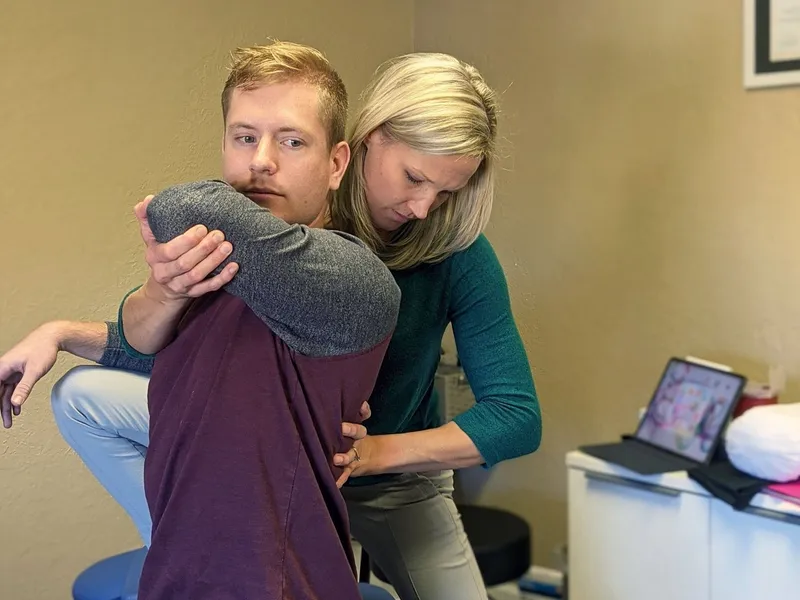
Your therapist performs a detailed, muscle-specific joint range of motion evaluation. Where motion is limited, they test further to pinpoint the muscles whose nerve communication is compromised.
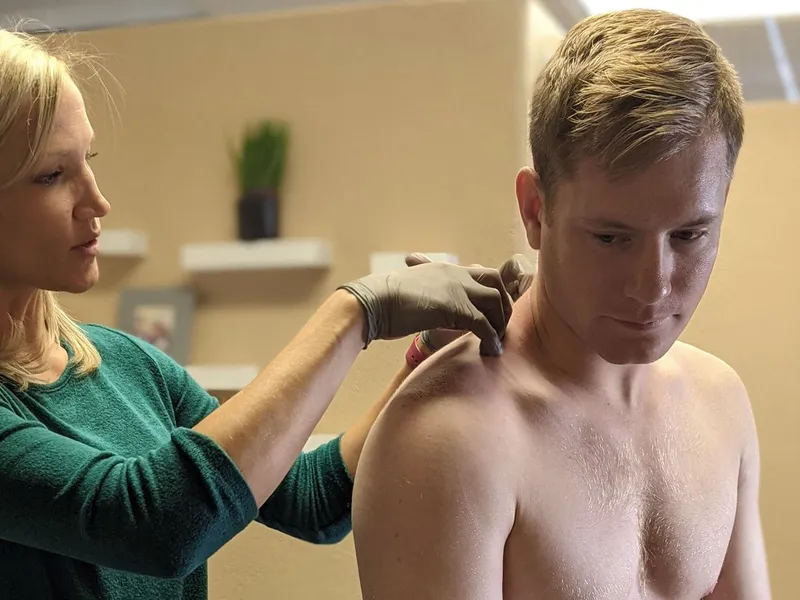
One method uses targeted palpation of the muscle. This stimulates its sensory receptors and strengthens the feedback traveling from the peripheral nervous system to the central nervous system.
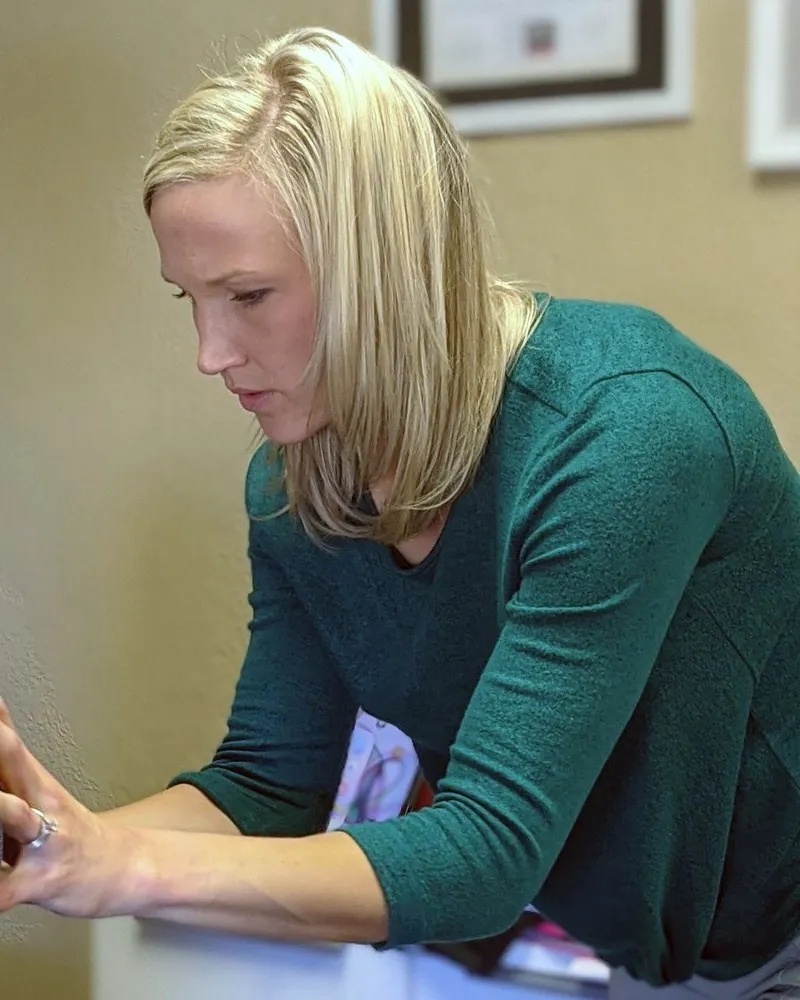
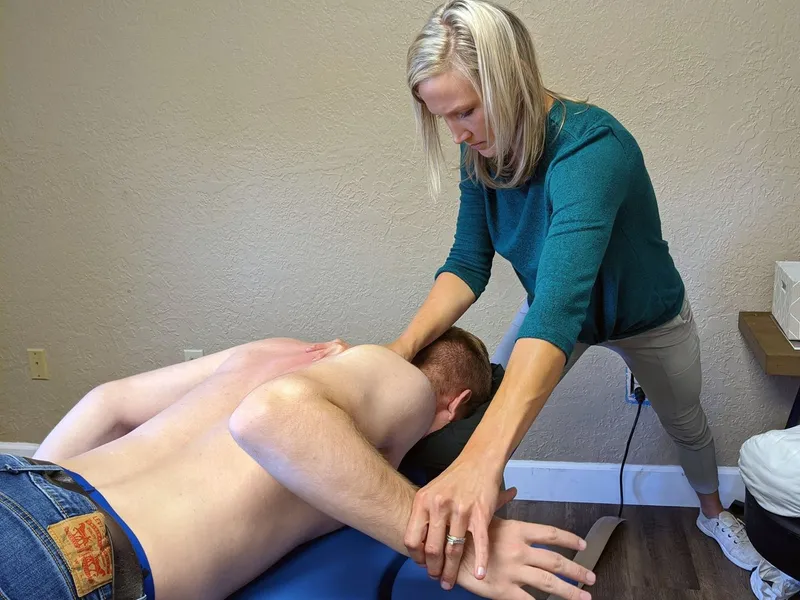
The second method is a specific isometric exercise in each position, which boosts the motor signal from the central nervous system to the muscle. As the connection returns, the muscle can work through its full range, giving you better stability and mobility.
MAT can be part of a 50-minute full treatment alongside other techniques, or the focus of a 25-minute Know What You Love visit centered on one joint. The goal of each session is to restore joint range and stability, improve strength, and reduce pain and inflammation.
Shyla actively listens to you and works with you to help solve your problems. Hands-on treatment. She is a Muscle activation expert! Shyla is always learning new techniques. Best PT I have had in years.

Neuro bio-electric stimulation that finds disconnects between nerves and muscles.

Thin needles that calm irritated nerves and release guarded, knotted muscle.

Stiff, achy joints often come down to the muscles around them. We find which ones.