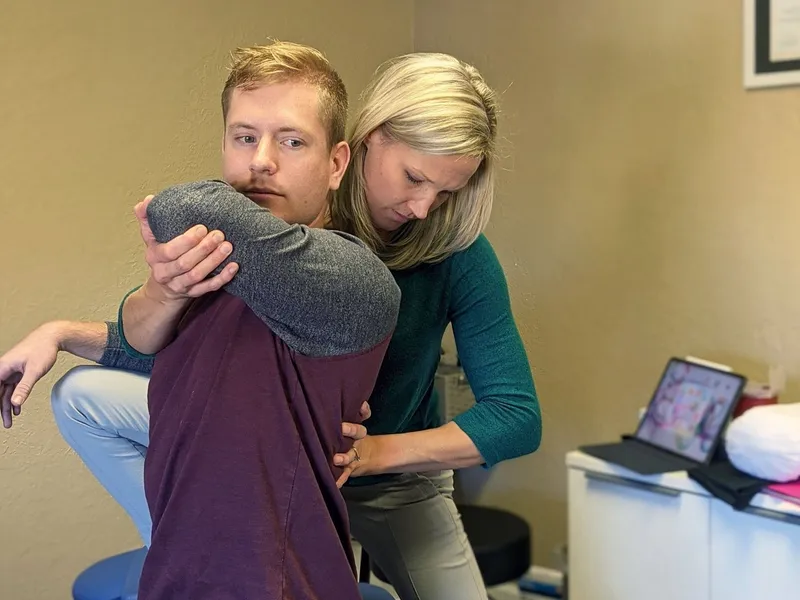
Reaching a high shelf, fastening a seatbelt, sleeping on your side. If your shoulder has started saying no to everyday movements, the source may be your neck, mid-back, or shoulder blade, not just the joint.
The shoulder gives us more freedom of motion than any other joint, and that mobility comes at the cost of stability. It is really a team: the ball-and-socket glenohumeral joint, the collarbone, and the shoulder blade gliding on the rib cage, with many of its muscles attaching to the neck and mid-back. When any part of that team stops doing its job, the shoulder feels it.
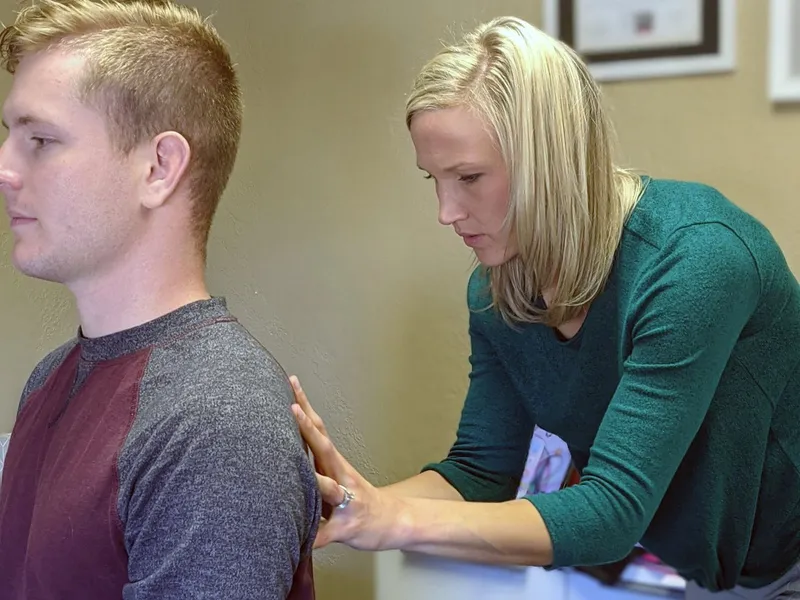
The rotator cuff is a group of four small muscles that keep the ball of the shoulder centered in the socket. Repetitive overhead work, a sudden heavy load, or gradual weakness can irritate the tendons or tear them, causing pain when you lift the arm, reach behind you, or lie on that side.
A rounded upper back and forward head make it harder for the shoulder blade to move well, which crowds the shoulder and strains the muscles that support it. If your mid-back cannot extend and rotate, the shoulder compensates, and fatigue or pain often follows.
Habit, compensation, or an old injury can change how the shoulder blade moves, so the wrong muscle contracts or relaxes at the wrong moment. You might notice it raising your arm, pushing up from a chair, or only during bench press and overhead pressing.
When the space above the shoulder joint narrows as the arm lifts, the tendons and bursa there can be pinched and irritated. Poor shoulder blade motion and a weak rotator cuff are common contributors.
With adhesive capsulitis, the joint capsule thickens and tightens, steadily limiting motion in every direction. It moves through painful and stiff phases over many months, and the right mobility work helps you keep and regain function along the way.
Arthritis can develop in the shoulder from overuse or long periods of weakness and instability. A shoulder that has dislocated or feels loose also needs strength and control work to stay where it belongs.
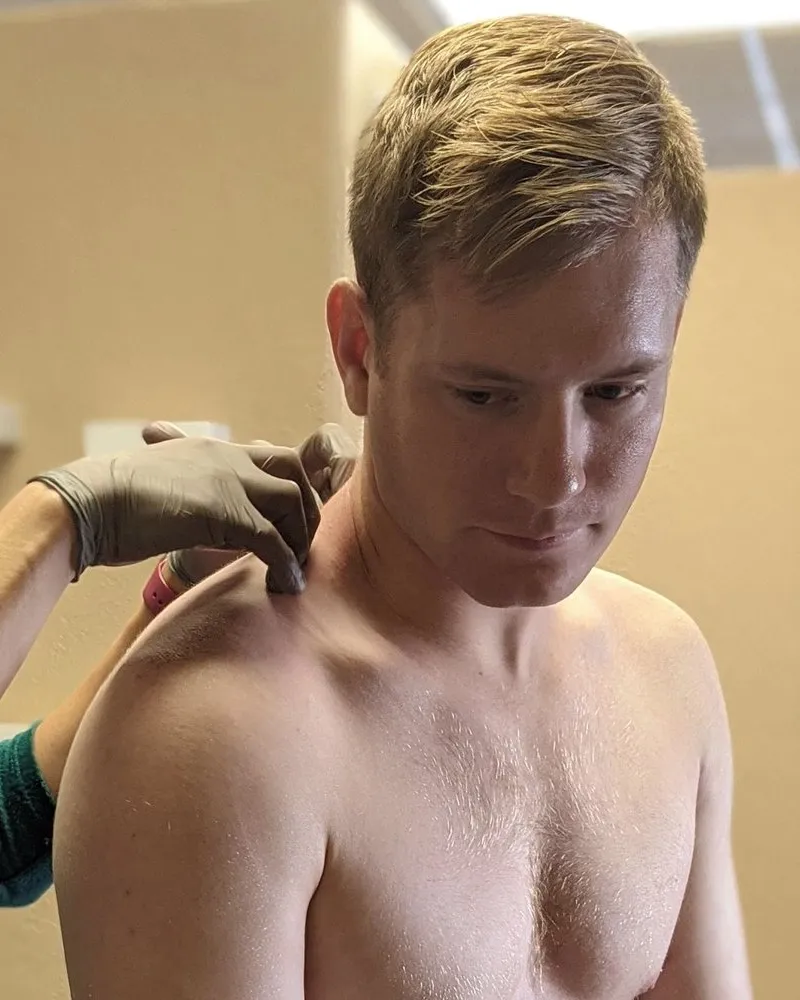
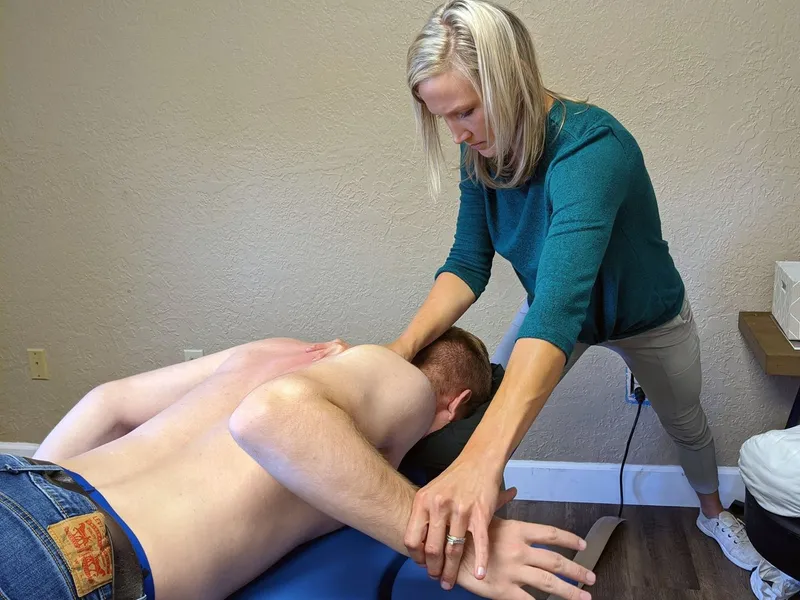
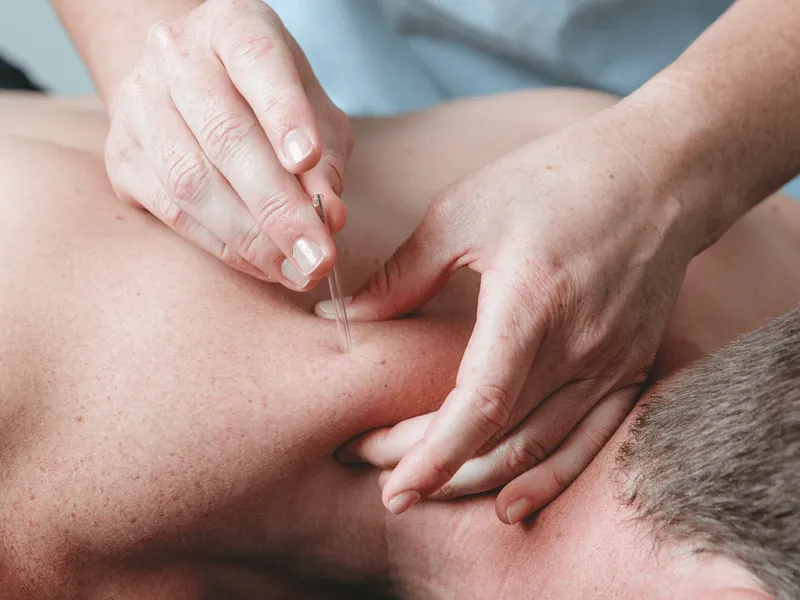
Shoulder pain is frustrating because it creeps into everything you do with your arms. At Maximum Impact, we do not just treat the spot that hurts. Your evaluation looks at the shoulder joint, the shoulder blade, the collarbone, your mid-back and neck posture, and how they move together. Every visit is one-on-one with your doctor of physical therapy (DPT) or physical therapist assistant (PTA), and a full treatment runs about 50 minutes. Depending on what we find, care may include integrative dry needling, which can help uncover pain that starts away from the sore spot; IASTM scraping for rotator cuff tendonitis and soft tissue restrictions; Muscle Activation Techniques to restore muscles that are not contracting well; cupping; and joint mobilization. Then we build trunk rotation, mid-back mobility, shoulder blade control, and rotator cuff strength so your shoulder has the support to stay healthy.
After a short phone consultation, your 1 hour 15 minute evaluation tests shoulder range of motion and strength, watches how your shoulder blade moves as you lift and reach, and checks the neck and mid-back that support it.
We calm irritated tissue and restore motion with hands-on care such as dry needling, scraping, and joint mobilization, along with mobility work for the mid-back and shoulder blade.
We progress rotator cuff and shoulder blade strength, trunk rotation, and overhead control, always with an eye on neck posture. Most patients come in about once a week and keep the work going with a home program.
Excellent care by Bobbi Pierson and all the PT assistants. I was treated for hip pain, and then quickly added my shoulder and knee to the care plan because the treatments were effective. I would highly recommend them for PT.

Shoulder problems change how the whole arm works, and elbow or wrist pain can follow.

When one joint hurts, others often compensate. We look at the whole body, not one joint in isolation.

Throwing, swimming, lifting, and racquet sports put big demands on the shoulder. We help athletes get back to them.