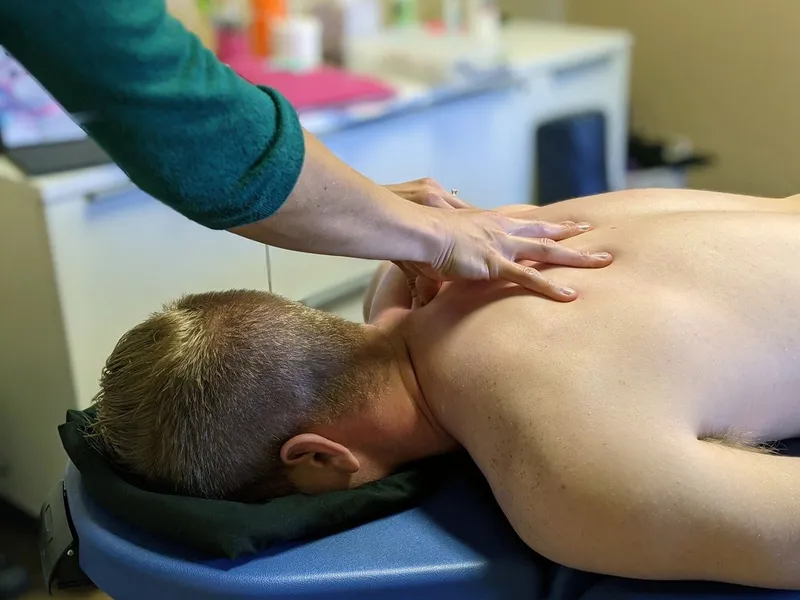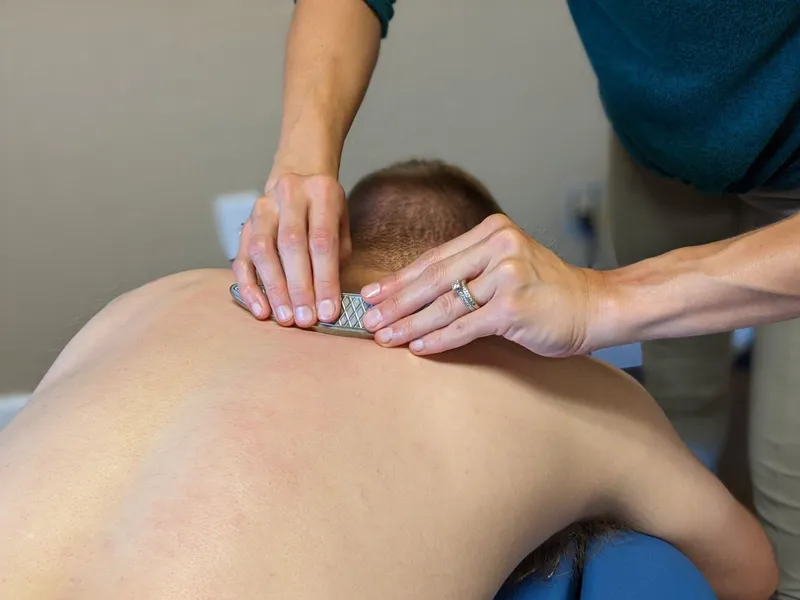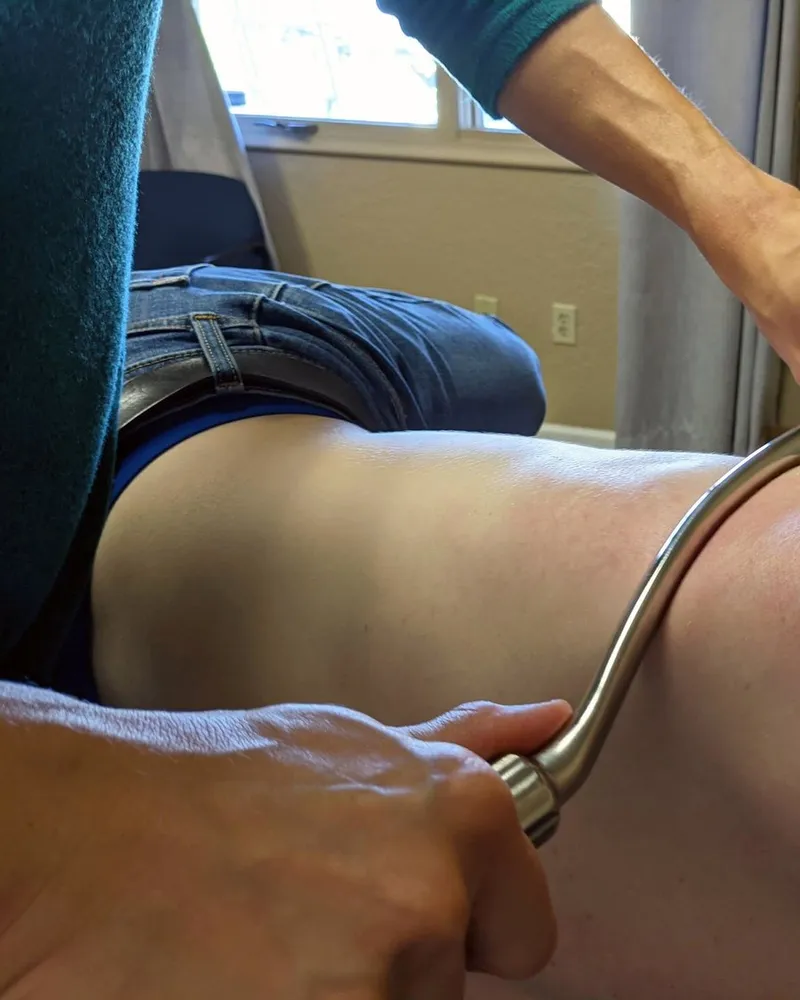
Instrument-assisted soft tissue work that finds and releases scar tissue, adhesions and fascial restrictions, so injured tissue can heal the way it should.

When an old injury leaves you stiff, sore or catching at the end of a movement, the tissue itself is often the holdup. Instrument-Assisted Soft Tissue Mobilization (IASTM) is an advanced form of myofascial mobilization, similar to deep tissue massage but performed with a specially shaped instrument. It is used mainly to detect and release scar tissue, adhesions and fascial restrictions. In Chinese medicine, the same idea is known as Gua Sha, and many people simply call it scraping.
The goal is to trigger an inflammatory healing response on purpose. That response stimulates the production of new collagen and supports proper, functional, pain-free healing. It is also why some soreness afterward is a normal part of the process.
IASTM can shorten your overall treatment time, speed up rehabilitation and recovery, and reduce the need for anti-inflammatory medication. It is a strong option for soft tissue injuries and tendinitis, and it can help with chronic conditions people assumed were permanent. Best of all, you can keep doing your everyday activities while you heal.
At Maximum Impact, scraping is rarely used on its own. It is one of several hands-on tools your therapist can combine in a 50-minute full treatment, alongside dry needling, cupping, myofascial work, joint mobilization and exercise. If you want to focus on one area, a 25-minute Know What You Love visit can center on scraping alone. Either way, the whole appointment is one-on-one with your DPT or PTA, and the treated area is always considered in the context of how your whole body moves, so we address the root cause instead of only the spot that hurts.
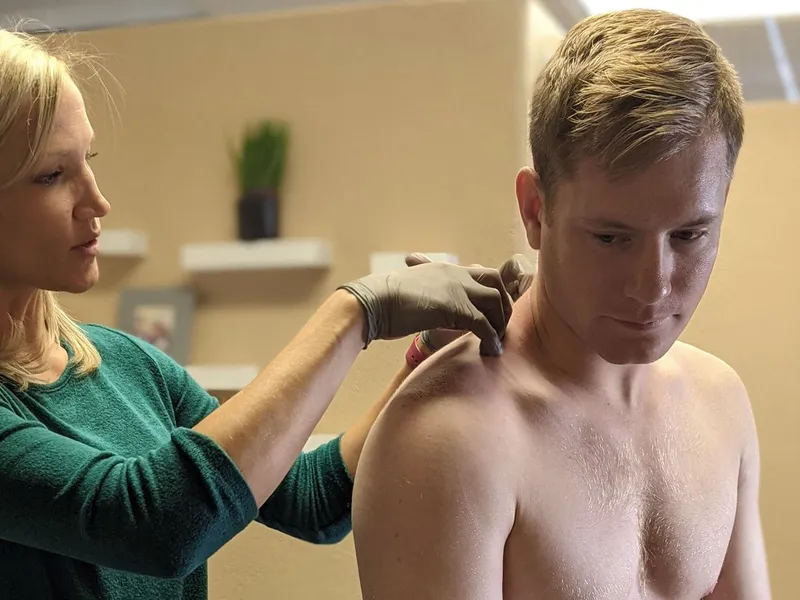
Anyone with a soft tissue injury or restriction can benefit, especially when it limits your range of motion, hurts when you move, or causes muscle spasms.
Achilles tendonitis, rotator cuff tendonitis, shin splints and plantar fasciitis all involve irritated tissue that responds well to scraping as part of a full plan. Runners and other active adults often see these overuse problems first.
Lumbar and cervical strains, carpal tunnel syndrome and hand pain can all limit how you work and move. IASTM helps restore glide in the tissue so everyday tasks and work stop aggravating it.
Scar tissue adhesions after surgery, including Caesarean scarring, can restrict nearby tissue for years. IASTM helps break those restrictions down and restore more comfortable movement around the scar.
Scraping is usually one part of a hands-on session. Here is what the process looks and feels like.
Your therapist glides the instrument over the area to detect adhesions and fascial restrictions, then focuses on the tissue that is limiting your movement or causing pain when you move.
Pressure and the number of strokes are adjusted to you. Most patients feel immediate results, and real, lasting relief with better range generally shows up by the third or fourth treatment.
You may feel sore afterward and notice small amounts of bruising. Bruising is not typical but can happen. The healing inflammatory process continues through the day, so general soreness is normal. Keep moving through your day as usual.
Tell your therapist if you take blood thinners, have a weakened immune system or bruise easily. You can still benefit from IASTM, but your therapist will use lighter pressure and possibly fewer strokes per area for the first few treatments. After treatment, avoid anti-inflammatories unless you are in true pain.
Serious and skilled professionals with a hands-on approach tailored to meet your individual needs and pace.

Thin needles that calm irritated nerves and release guarded, knotted muscle.

Achilles tendonitis, plantar fasciitis and shin splints, treated with the whole body in mind.

Rotator cuff tendonitis and shoulder pain, with the neck and upper back checked too.