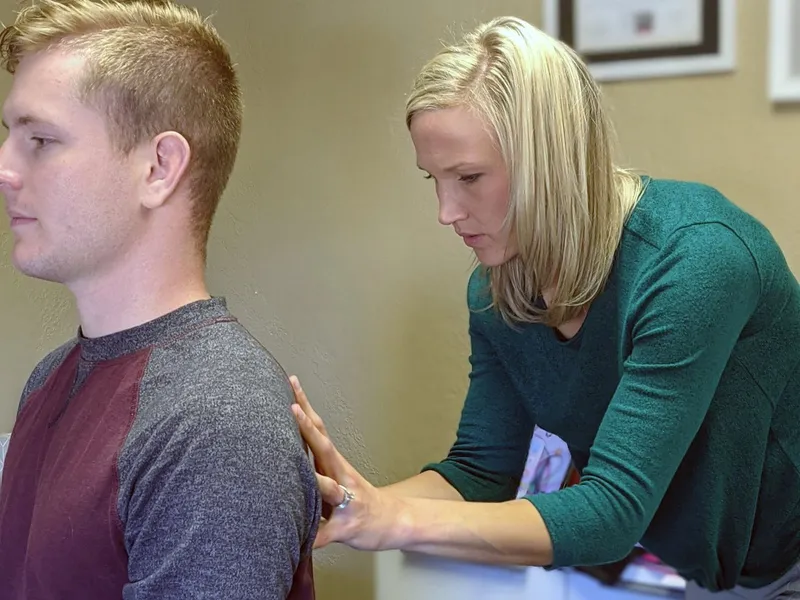
Every step reminds you something is off. If you have learned to walk around the pain instead of through it, a whole-body evaluation can show why your foot keeps taking the hit.
Foot and ankle pain rarely starts all at once. It builds from small imbalances in how you walk, what you wear, the surfaces you stand on, and how your hips and knees share the load. That is why we look past the sore spot. The heel or ankle is often where the problem shows up, not where it started.
A sprain stretches or tears the ligaments that hold the ankle together. Even a mild sprain can leave the ankle less stable if it was never fully rehabbed. Months or years later it still swells easily, feels weak on uneven ground, or gives way without warning. The balance and muscle control the ankle lost can be retrained, but it takes specific work.
The plantar fascia is a thick band of tissue along the sole of the foot. When it is overloaded or held under constant tension, it becomes irritated and sends sharp pain into the heel and arch, often worst with the first steps of the morning. Calf tightness, foot mechanics, and how much time you spend on your feet all play a part.
The Achilles tendon connects the calf to the heel and absorbs force with every step, climb, and jump. When it is asked to do more than it is ready for, or the calf muscles are tight and not firing well, the tendon becomes painful and stiff. Pain at the back of the heel that is worse after rest or after running is a common sign.
Pain along the inside of the shin often shows up when walking or running volume rises faster than the tissues can adapt. A new running plan, more time hiking in the foothills, or a switch to harder surfaces can all set it off. Foot control, calf strength, and hip mechanics influence how much stress lands on the shin.
Flat feet and high arches are not problems on their own. Trouble starts when the foot lacks the flexibility or strength to adapt, so other areas compensate. That can mean pain in the arch, heel, or outer edge of the foot, and it can travel up to the knee and hip.
New shoes, a job that keeps you on your feet, or a sudden jump in activity can overload tissue that was not prepared. Old fractures and surgeries can leave scar tissue and stiffness that change how the ankle moves. Both are common reasons a foot that was fine for years suddenly is not.
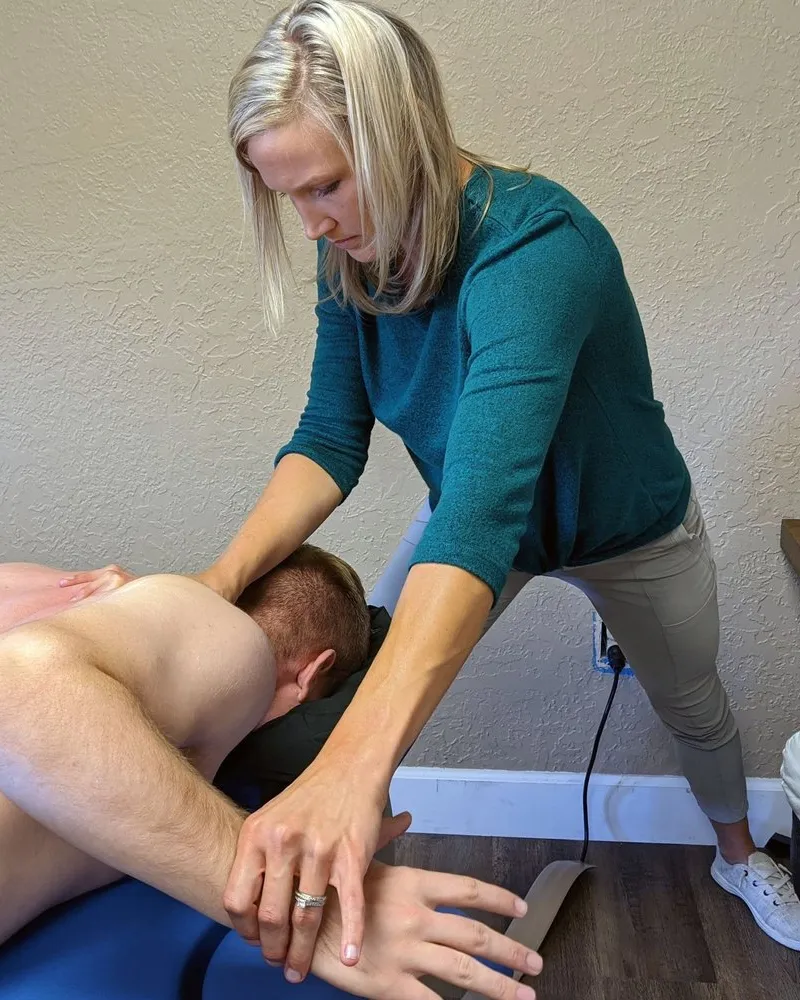
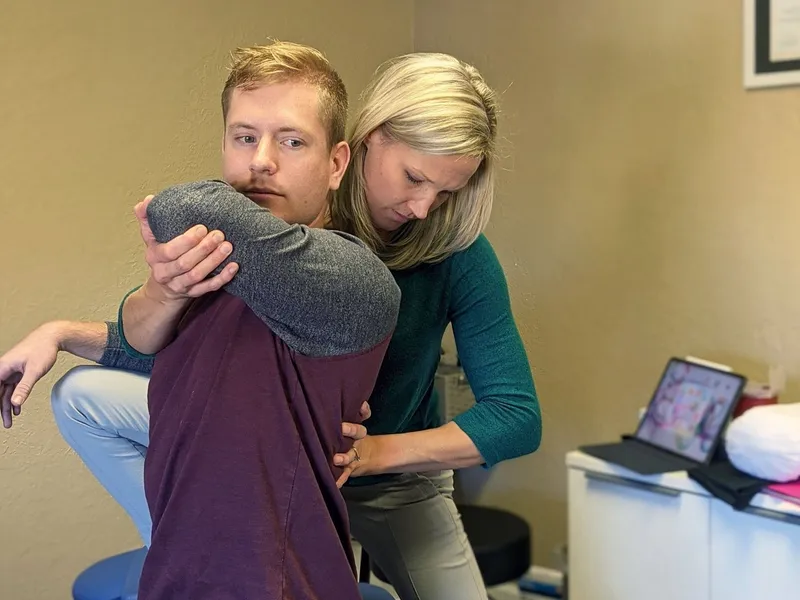
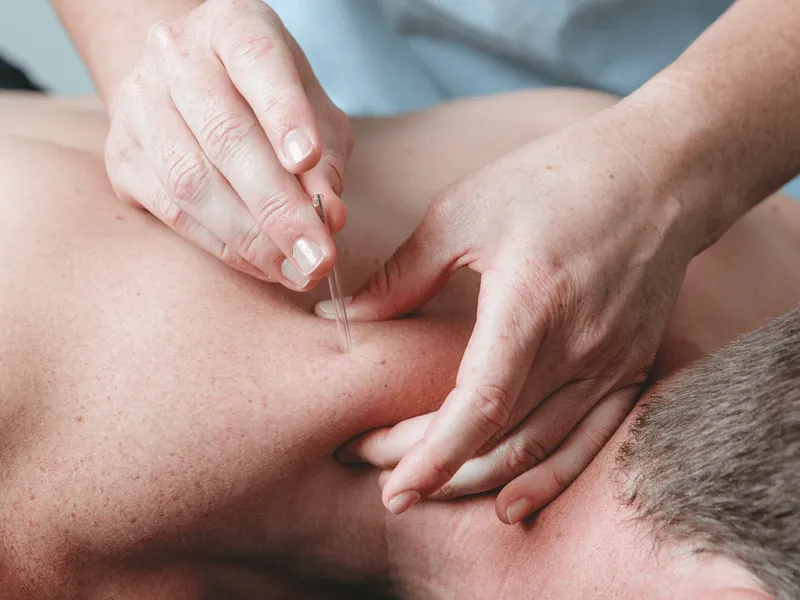
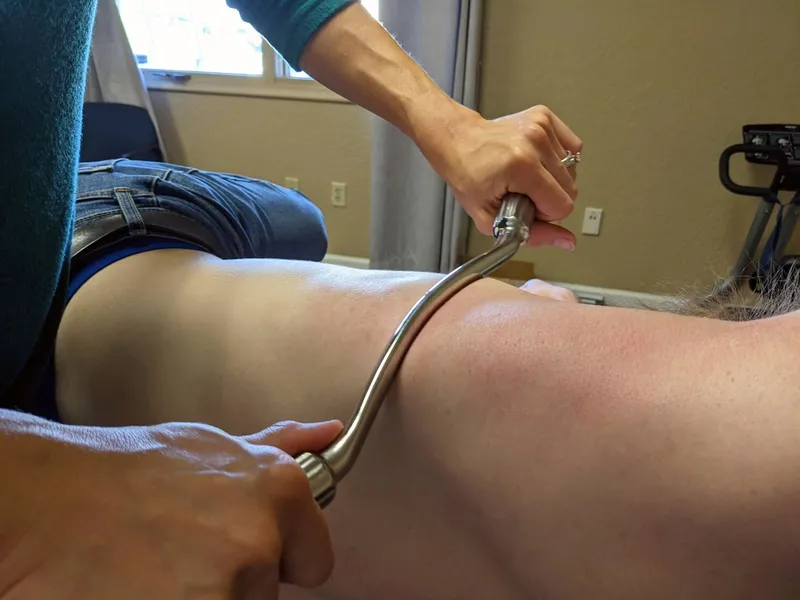
Your feet are not meant to hurt with every step. At Maximum Impact, your evaluation looks at the whole chain, from the way your foot meets the ground to how your knee, hip, and trunk move above it, so we treat the cause instead of chasing the sore spot. Every visit is one-on-one with your doctor of physical therapy (DPT) or physical therapist assistant (PTA), and a full treatment runs about 50 minutes. Depending on what we find, that time can include IASTM (instrument-assisted scraping), which we use for plantar fasciitis, Achilles tendonitis, and shin splints; integrative dry needling for tight, guarded calf and foot muscles; Muscle Activation Techniques to restore how the muscles around the ankle fire; and joint mobilization for a stiff ankle or midfoot. Then we build the strength, balance, and mobility your foot and ankle need to hold onto the progress between visits.
It starts with a short phone consultation to make sure we are the right fit. Your first visit is a 1 hour 15 minute evaluation where we watch you stand, walk, and balance, check ankle and arch mobility, and test the calf, knee, and hip. You leave knowing why your foot hurts and what the plan is.
Treatment sessions combine hands-on work such as scraping, dry needling, and joint mobilization with targeted mobility drills. The aim is to calm irritated tissue and restore the motion your foot and ankle have lost, so walking stops feeling like work.
As pain settles, the focus shifts to strength, balance, and control through the foot, ankle, and hip. You get a home program that fits your life, and most patients come in about once a week. The strength you build is what keeps the pain from coming back.
The staff is very curious and is willing to go the extra step to get you fully recovered. I recommended them and would go back

When the foot and ankle stop doing their job, the knee and hip often pick up the slack. We assess and treat the whole chain.

Steady balance starts at the ground. Weak or stiff feet and ankles make every step less certain.

Ankle sprains and foot overuse injuries are common in sport. Real recovery means strength and stability that last.