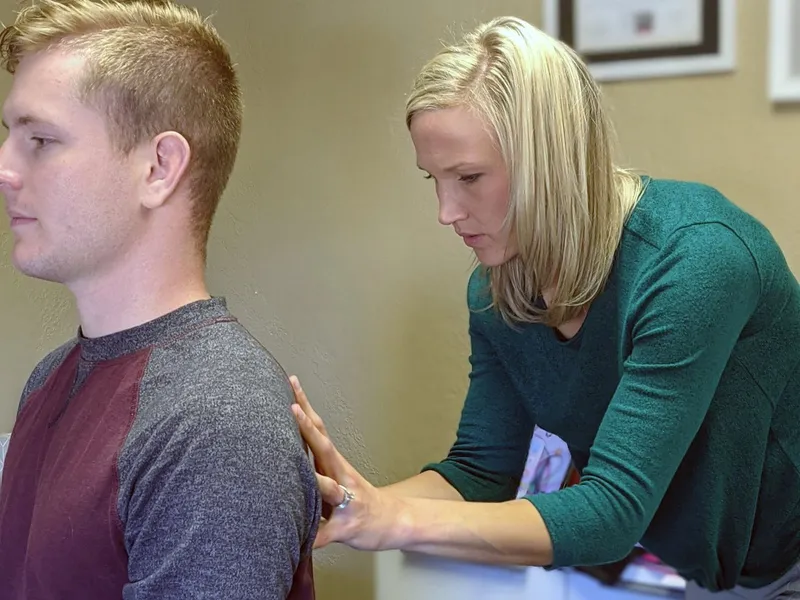
The ache starts at the base of your skull and creeps forward by mid-afternoon. If headaches have become your normal, your neck, upper back, and even the way you breathe may be part of the story.
Many recurring headaches are tied to the neck. The upper neck shares nerve pathways with the head, so stiffness and muscle tension there can be felt behind the eyes, at the temples, or across the forehead. Posture, breathing habits, stress, and old injuries all feed into it. Finding which of those are driving your headaches is the first step.
Laptops, phones, driving, reading: daily life keeps pulling the head forward. Over time, the muscles at the back of the neck and top of the shoulders work overtime to hold the head up, while the deep stabilizing muscles at the front of the neck switch off. That steady strain is a common driver of tension headaches that build through the workday.
When you sit curled forward, the diaphragm has a harder time doing its job, and smaller accessory muscles in the neck, such as the scalenes, take over. They were never meant to power every breath. Tight, overworked neck muscles and recurring tension often follow, which is why breathing is part of how we treat headaches.
Stiff or irritated joints in the upper neck can refer pain into the head, usually on one side and often with reduced neck rotation. These headaches tend to change with neck position or long sustained postures, and they respond to care aimed at the neck rather than the head.
Stress shows up in the body. Raised shoulders, a clenched jaw, and held breath keep the neck and upper back muscles guarded for hours at a time. Tender, tight spots in those muscles can refer pain into the temples and behind the eyes.
Clenching or grinding, especially at night, overloads the jaw muscles and the temporomandibular joint. Jaw dysfunction and neck tension often travel together, and both can contribute to headaches around the temples and face. Our team has experience treating jaw pain alongside the neck.
A car accident, a fall, or a sports collision can change how the neck moves long after the first pain fades. Guarded muscles and stiff segments left behind by an old injury are a frequent, overlooked source of ongoing headaches.
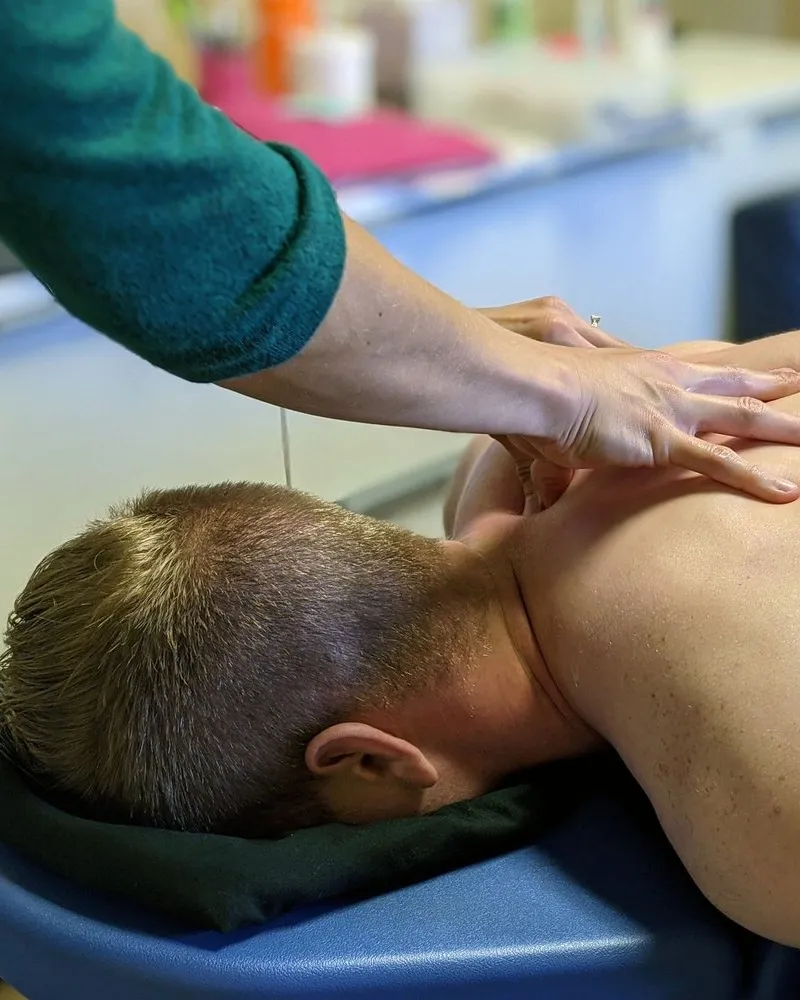
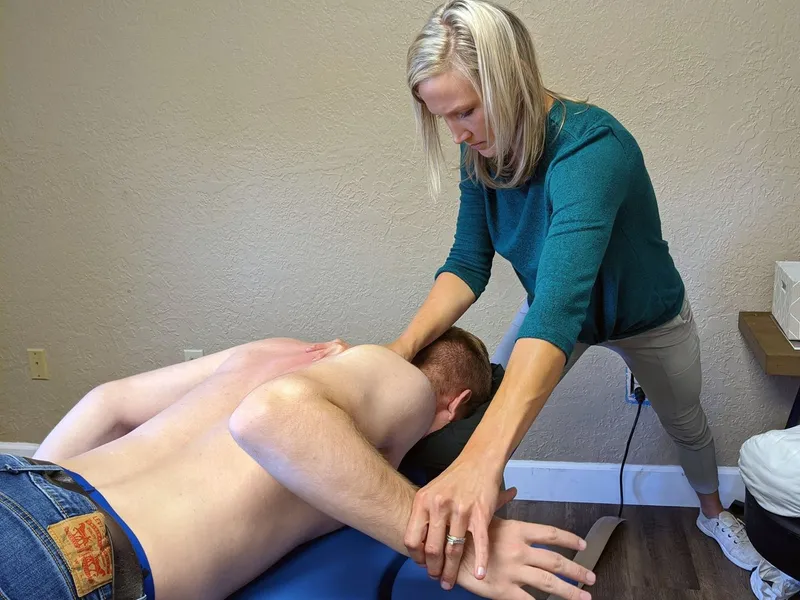
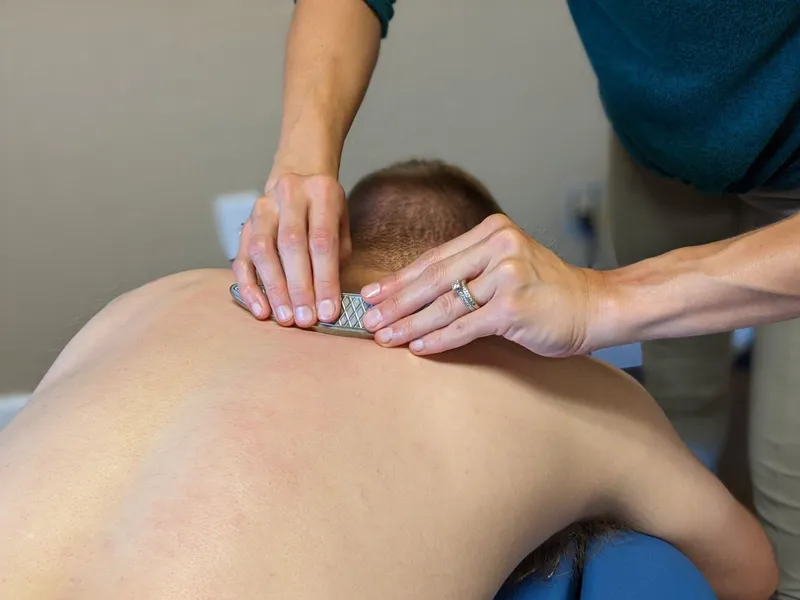
Headaches are frustrating because the pain is in your head, but the cause usually is not. At Maximum Impact we look at the whole picture: neck and upper back mobility, shoulder and jaw mechanics, posture, and how you breathe. Every visit is one-on-one with your doctor of physical therapy (DPT) or physical therapist assistant (PTA), with about 50 minutes for a full treatment. Care may include integrative dry needling to calm guarded muscles in the neck and upper back, IASTM (scraping) for cervical strains and upper trap tension, cupping, and joint mobilization to restore motion in a stiff neck and mid-back. We pair that with diaphragmatic breathing, posture retraining, and strengthening for the deep neck muscles that hold your head up, so relief lasts beyond the treatment table. Not every headache is a physical therapy problem. A sudden, severe headache, or one that comes with vision changes, weakness, numbness, or confusion, needs medical attention right away.
We start with a phone consultation to make sure your headaches fit what we treat, and we will happily point you elsewhere if another provider is a better match. Your 1 hour 15 minute evaluation covers your headache history, neck and upper back motion, posture, jaw, and breathing pattern.
Hands-on care targets the tight, guarded tissue and stiff joints we found, using dry needling, scraping, cupping, and joint mobilization as needed. You also learn simple breathing and posture resets that take a few minutes a day at your desk.
We strengthen the deep neck and upper back muscles so your head is supported without strain, and build habits that fit your workday. Most patients come in about once a week, and your home program carries the work in between.
I started with a neck issue and through various therapies the pain was, less and mobility was greatly increased. I appreciated her care and kindness and will highly recommend her for excellent physical therapy.

The neck, upper back, and low back work as one system. Stiffness in one region often shows up as pain in another.

Neck problems and dizziness sometimes overlap. Our team has experience treating vertigo and balance problems.

Headaches that have lasted months or years need a plan that addresses the root cause, not another temporary fix.